This is the simplest explanation of partial pressure and Dalton’s Law applied to scuba diving I’ve found. In her underwater physics video, Marissa explains how depth increases pressure. While Boyle’s Law covers total gas volume, Dalton’s Law looks at the individual gases inside that mix.
Imagine your breathing air as a live musical duet. Nitrogen and oxygen play together to create the total sound. Dalton’s Law states that the total volume is simply their combined loudness. As you dive deeper, the ocean cranks up the master volume knob. Both individual tracks suddenly blast much louder. This louder individual track represents an increased partial pressure.
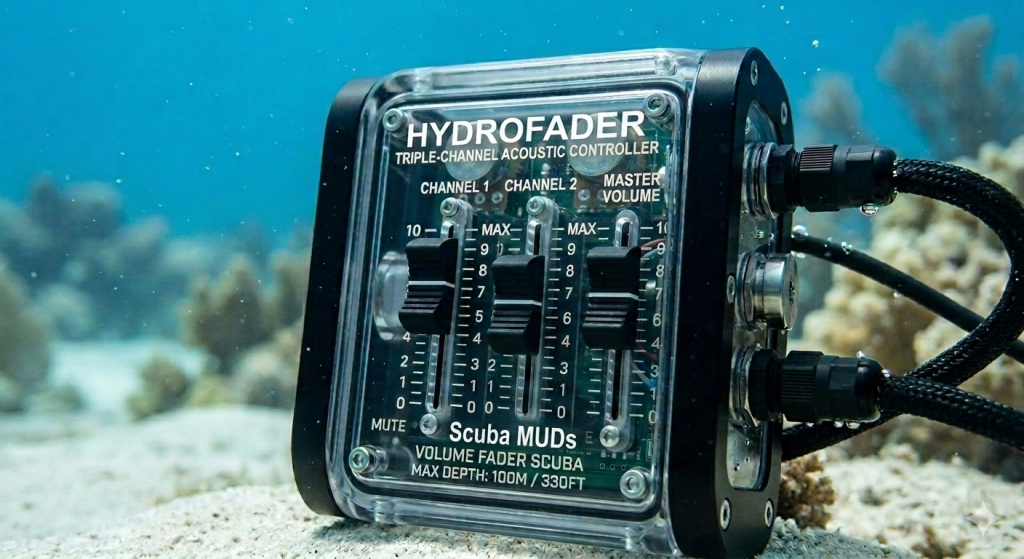
Understanding this pressure shift keeps you safe down below. Higher total pressure forces more nitrogen into your bloodstream. Coming up too fast makes that gas fizz like soda. This creates dangerous bubbles, causing decompression sickness. Marissa notes that these specific gas pressures heavily affect your body. Tracking partial pressures helps you avoid oxygen toxicity, and allows you to calculate exact depth limits safely.
In scuba diving, MOD stands for Maximum Operating Depth. It is the deepest depth at which a specific breathing gas mixture can be safely breathed without risking central nervous system oxygen toxicity. While we can rely on our dive computer to calculate our MOD for us, it is the best practice to have a thorough understanding of the theory behind the dive tables and algorithms our computers are based on.
For further exploration on this topic, contact your scuba instructor or local dive shop to ask about the Enriched Air Nitrox Course they offer and learn about extending your bottom time while staying safe.
